The
wide variety of these devices would surprise even Dr. Michelson. Polarizing,
non-polarizing, cemented, optically contacted (epoxy free bonded), hexagonal, square, small
(1mm), large (45mm), UV, visible, IR. A great breadth
of expertise is required to manufacture a space qualified, wide-field
Michelson interferometer. Material selection, coating design,
modelling of phase & polarization, mechanical design, process development,
quality planning, glass shaping and polishing, optical contacting, cementing
and finally testing, testing and testing. Of course that's what
makes it so interesting and challenging to work on these projects.
If you have an interest
in this kind of device do not hesitate to contact
us to discuss the various parameters and trade-offs. Free
advice is our specialty.
Recent Michelson
Interferometer Projects
 |
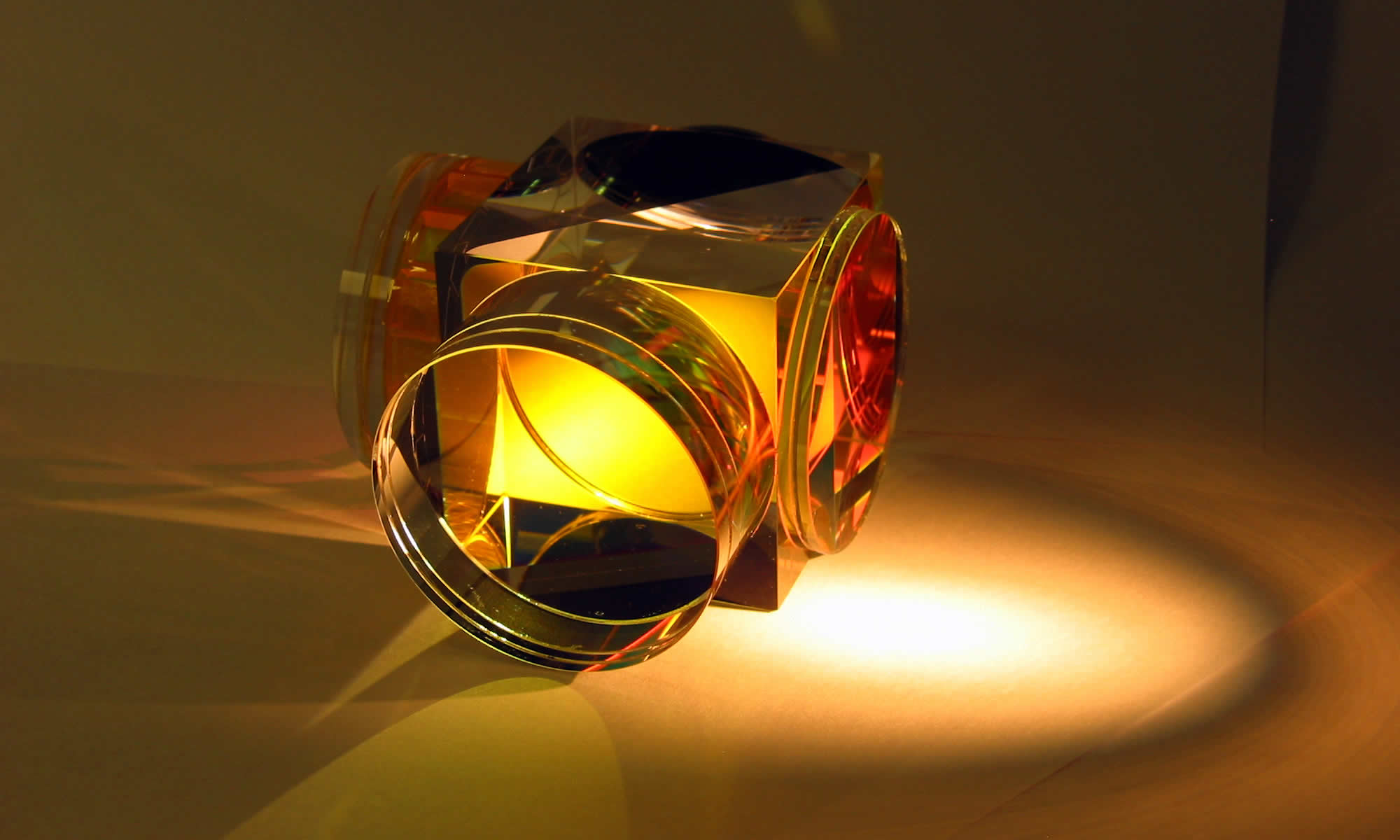
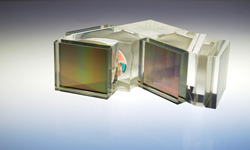
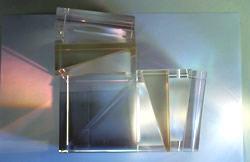
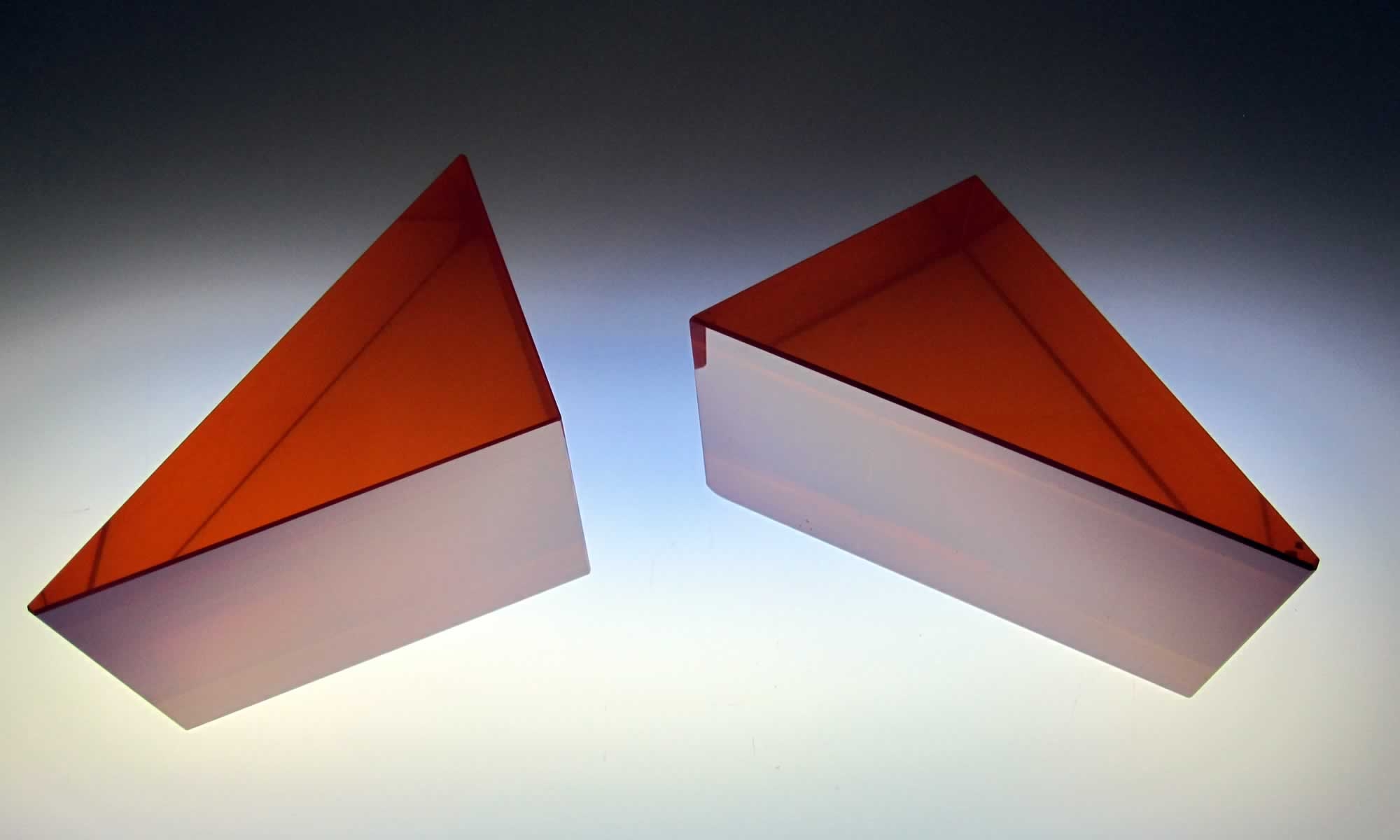
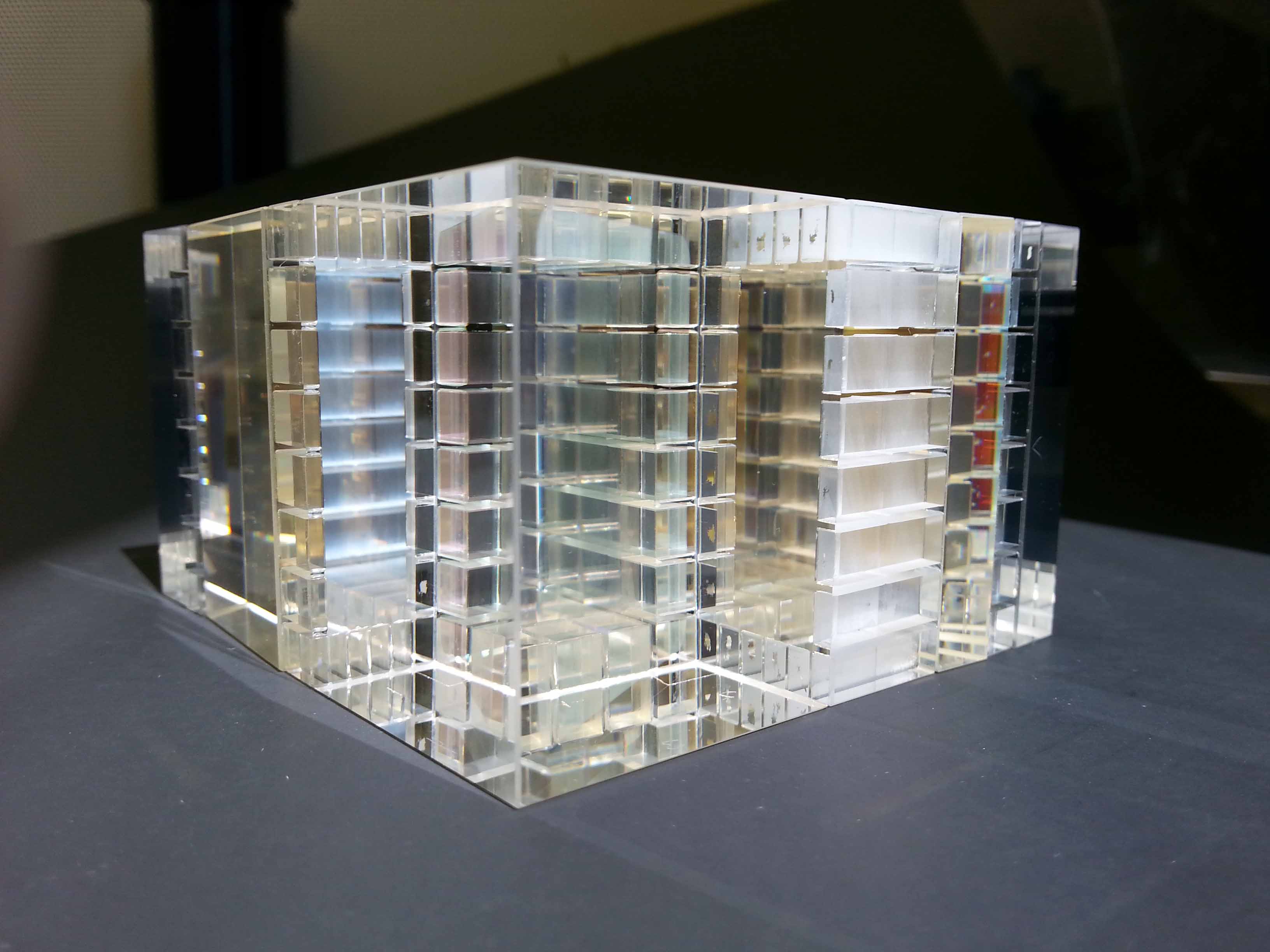
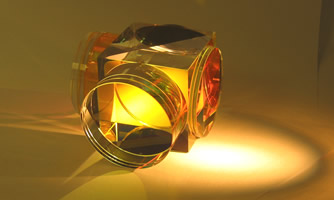
"Monolithic Achromatic Nulling Interference Coronagraph (MANIC), an optic consisting of bonded prisms and a symmetric beamsplitter. The optic is designed to enable the direct detection of nearby Jupiter-like exoplanets" - Boston University |
 |
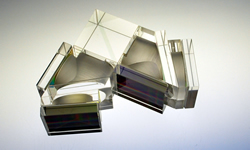
Another view of the beautiful MANIC, Monolithic Achromatic Nulling Interference Coronagraph |
 |
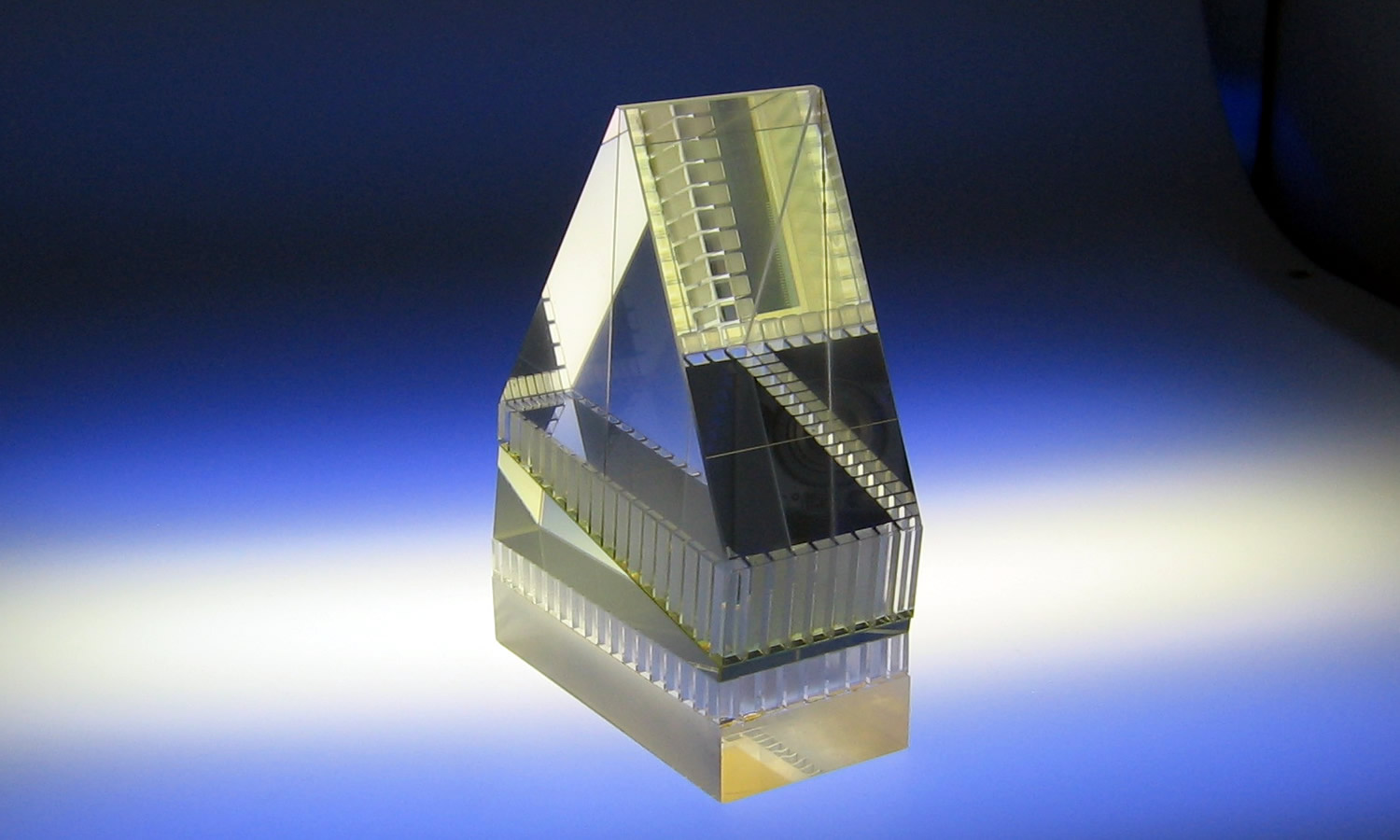
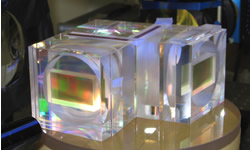
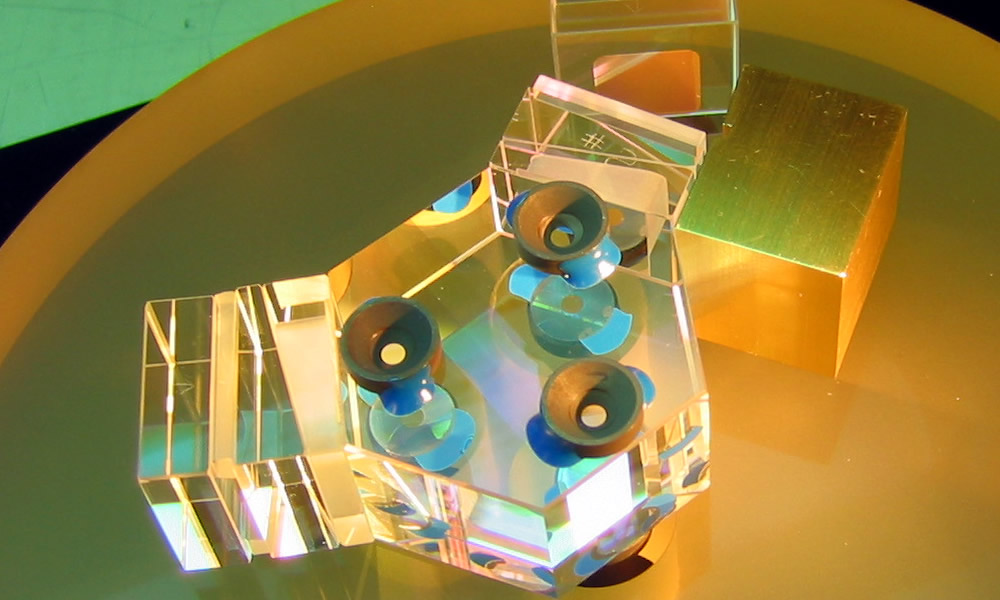
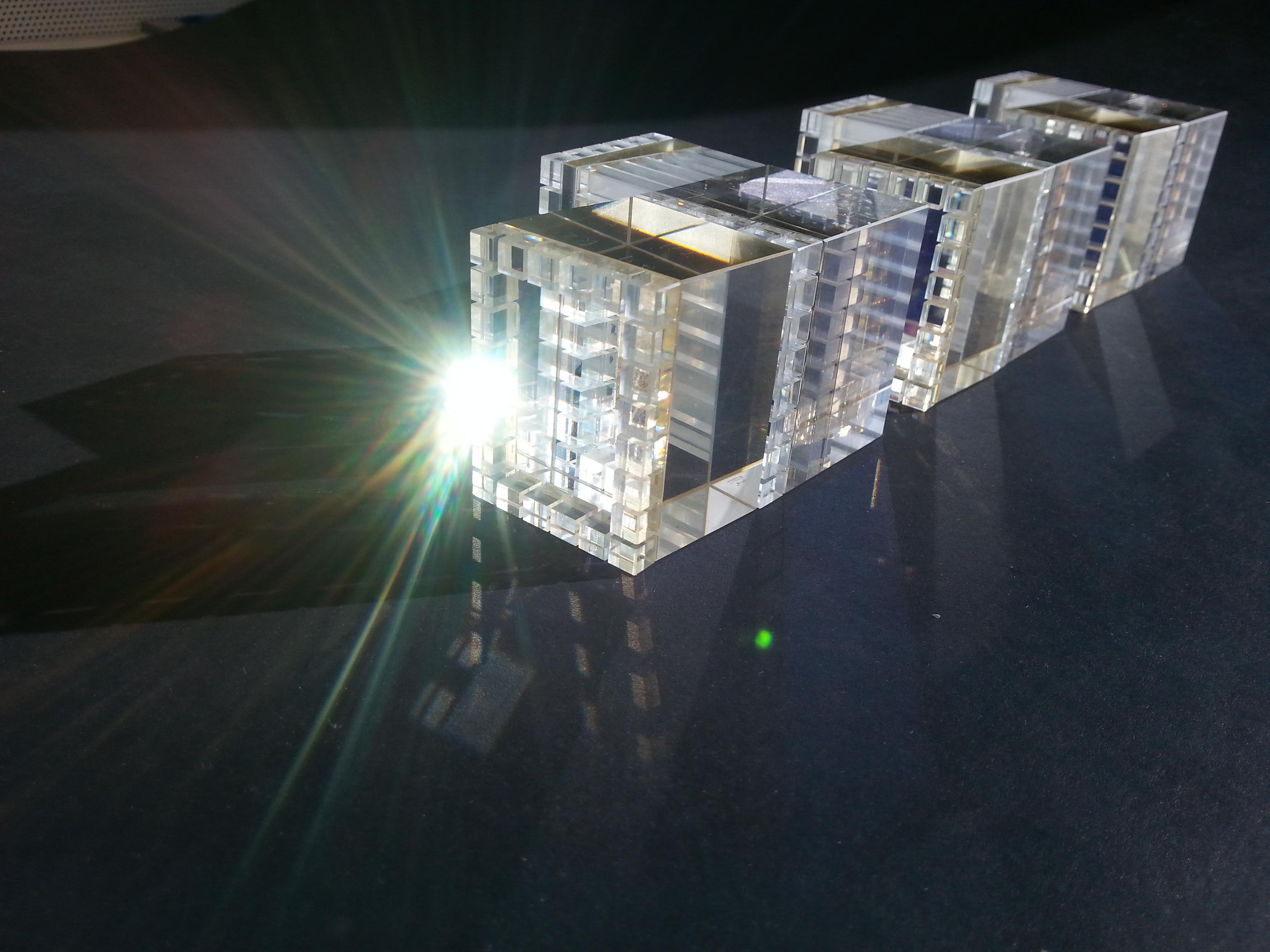
Monolithic Doppler Asymmetric Spatial Heterodyne, DASH, interferometer made for the Naval Reseach Lab. The field widening prism at the bottom is supported by slotted spacers to allow differential thermal expansion.. |
 |
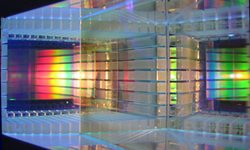
The DASH interferometer enables high accuracy wind measurements with no moving parts. The grating on one arm is creating some extra color in this photo.
|
 |
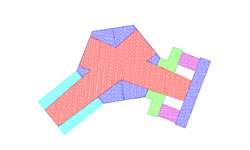
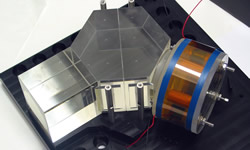
The schematic diagram of a hexagonal Michelson with a piezo tuned scanning arm. |
 |
The real deal with the piezo tuned scanning arm wrapped in brown kapton tape to prevent dust from entering the air spaced arm. |
 |
A close up view of the scanning arm, also visible is the silver mirror for this leg of the Michelson . |
 |
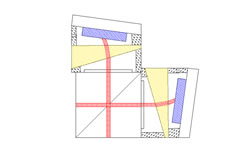
A schematic diagram of the SHOW (Spatial Heterodyne Observations of Water) interferometer. The Yellow wedges are Zinc Sulfide (Cleartran) and the blue rectangles represent gratings. The beam path is shown in red. |
 |
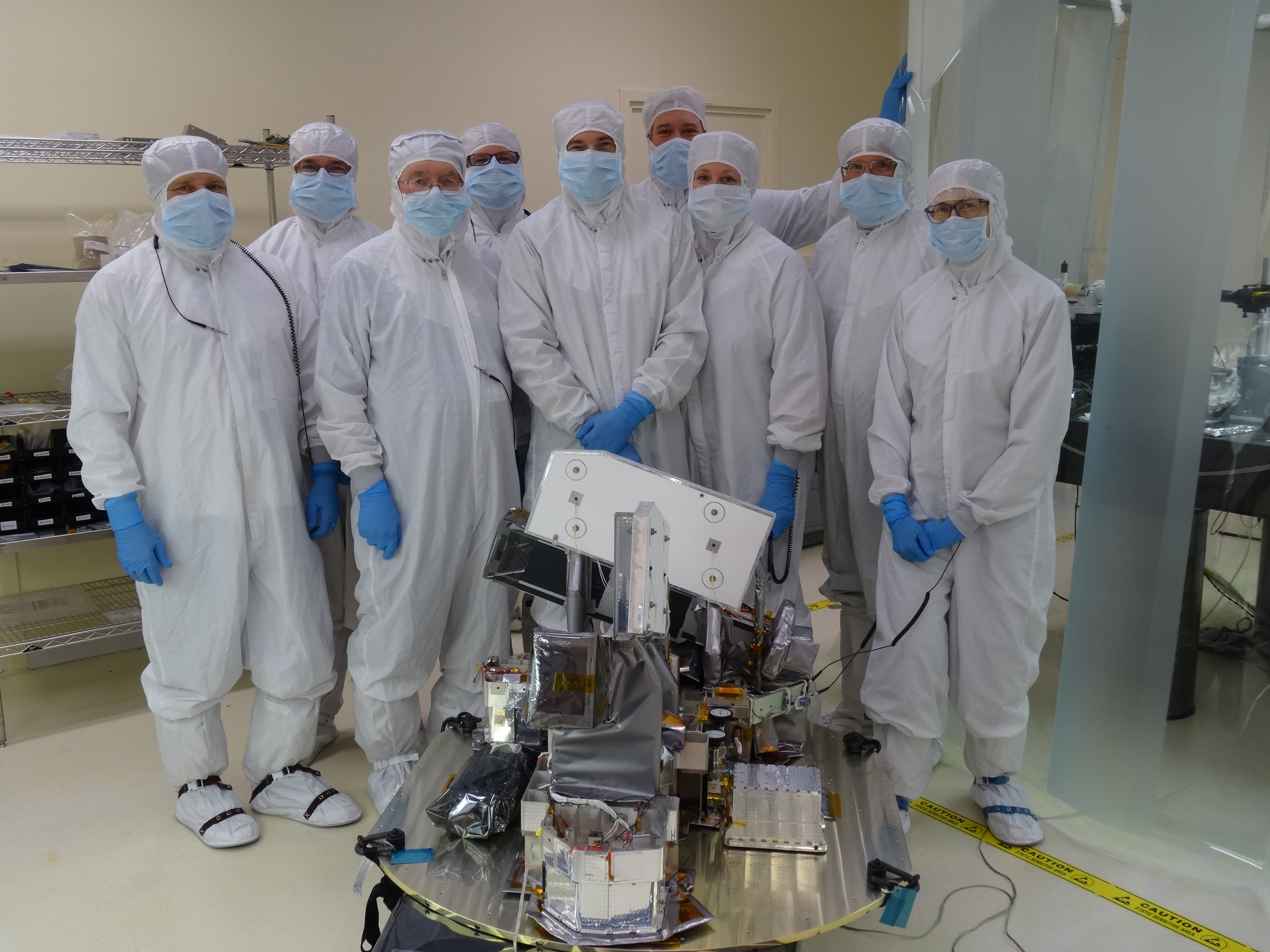
The actual instrument fully assembled and tested. The Zinc Sulfide prisms "field widen" the instrument by compensating for the angle of the grating. |
 |
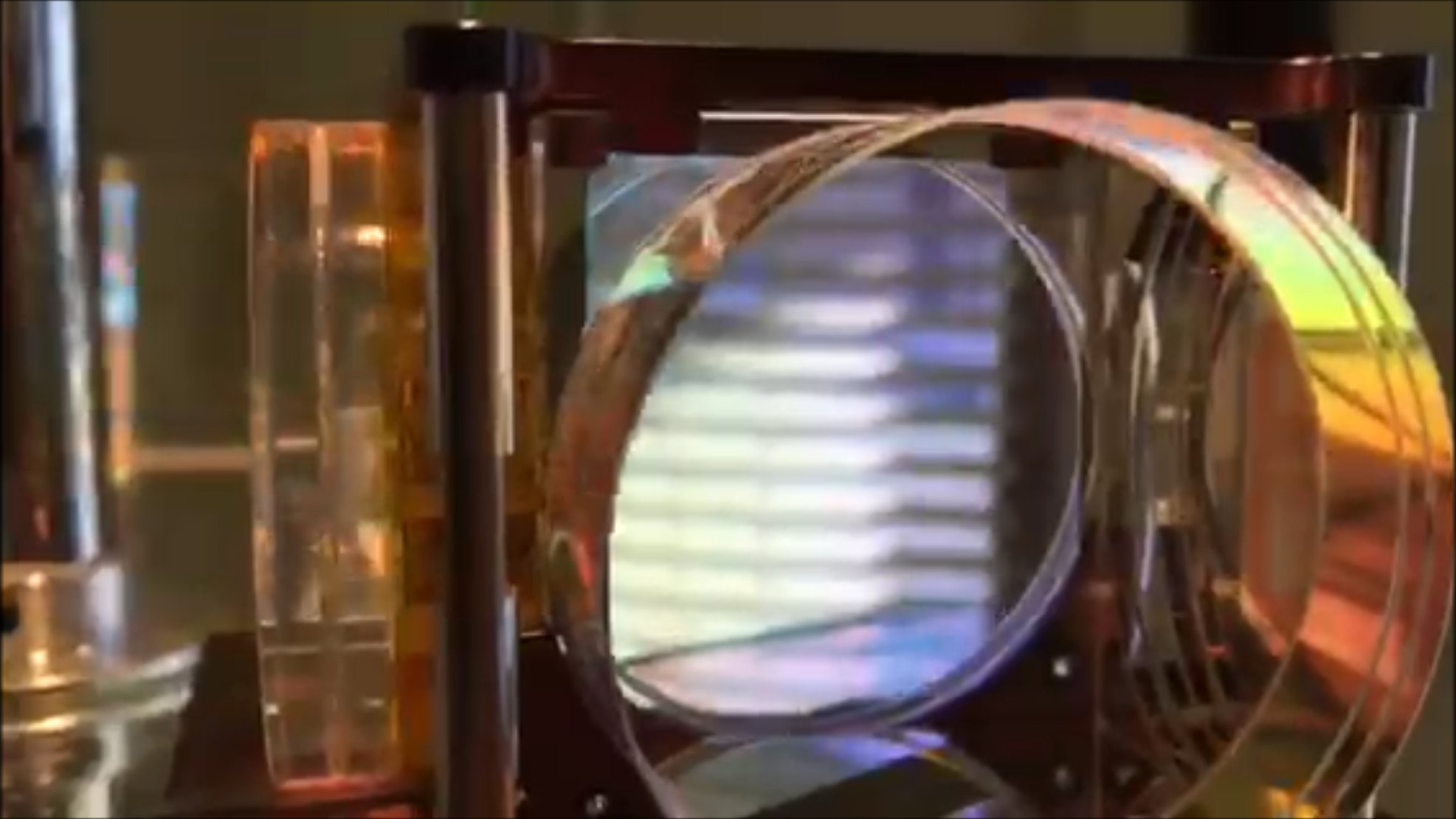
The SHOW instrument shown here at an angle with the gratings visible. The gratings are used instead of the mirrors in a standard Michelson. Each wavelength produces its own set of fringes. A Fourier transform is done to recover the spectrum. |
 |
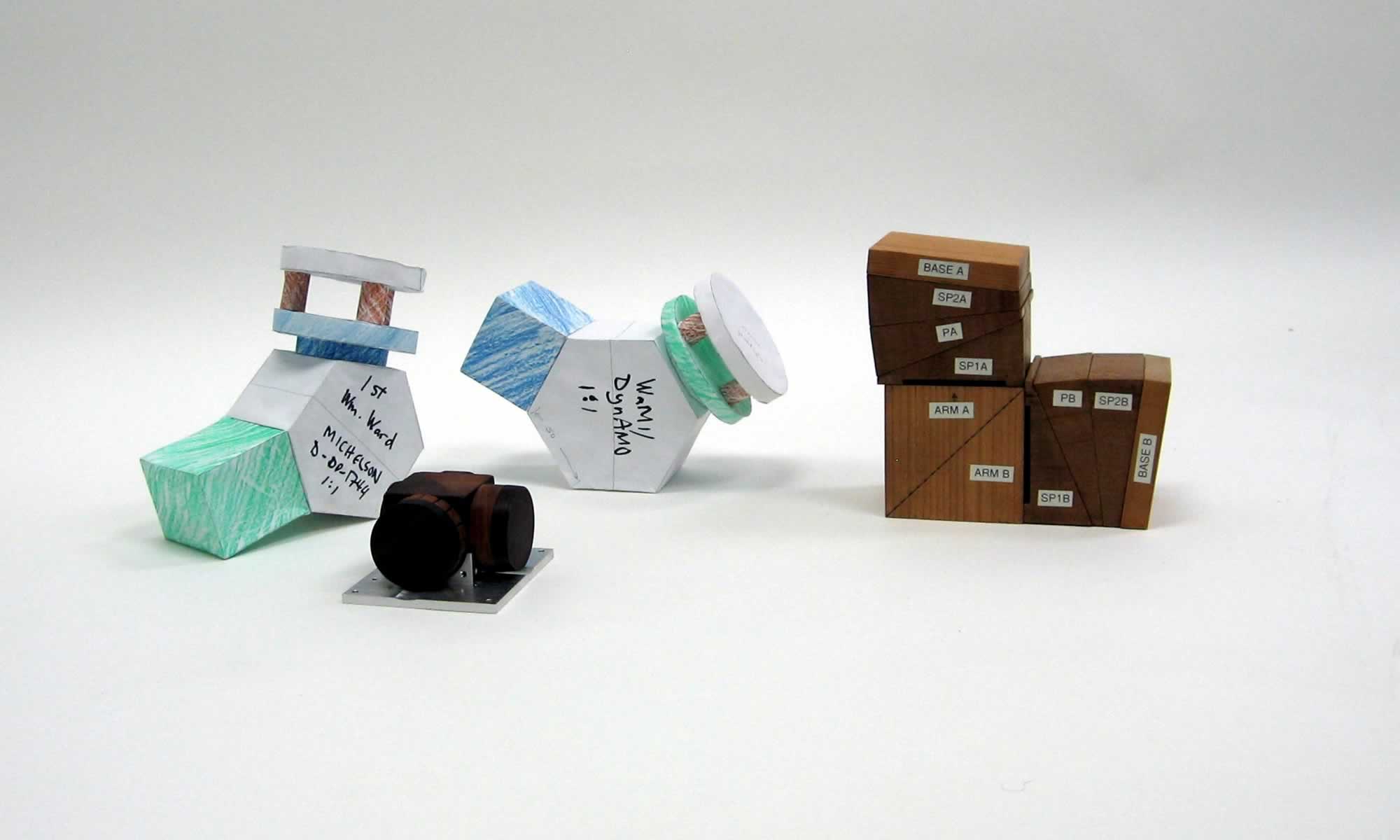
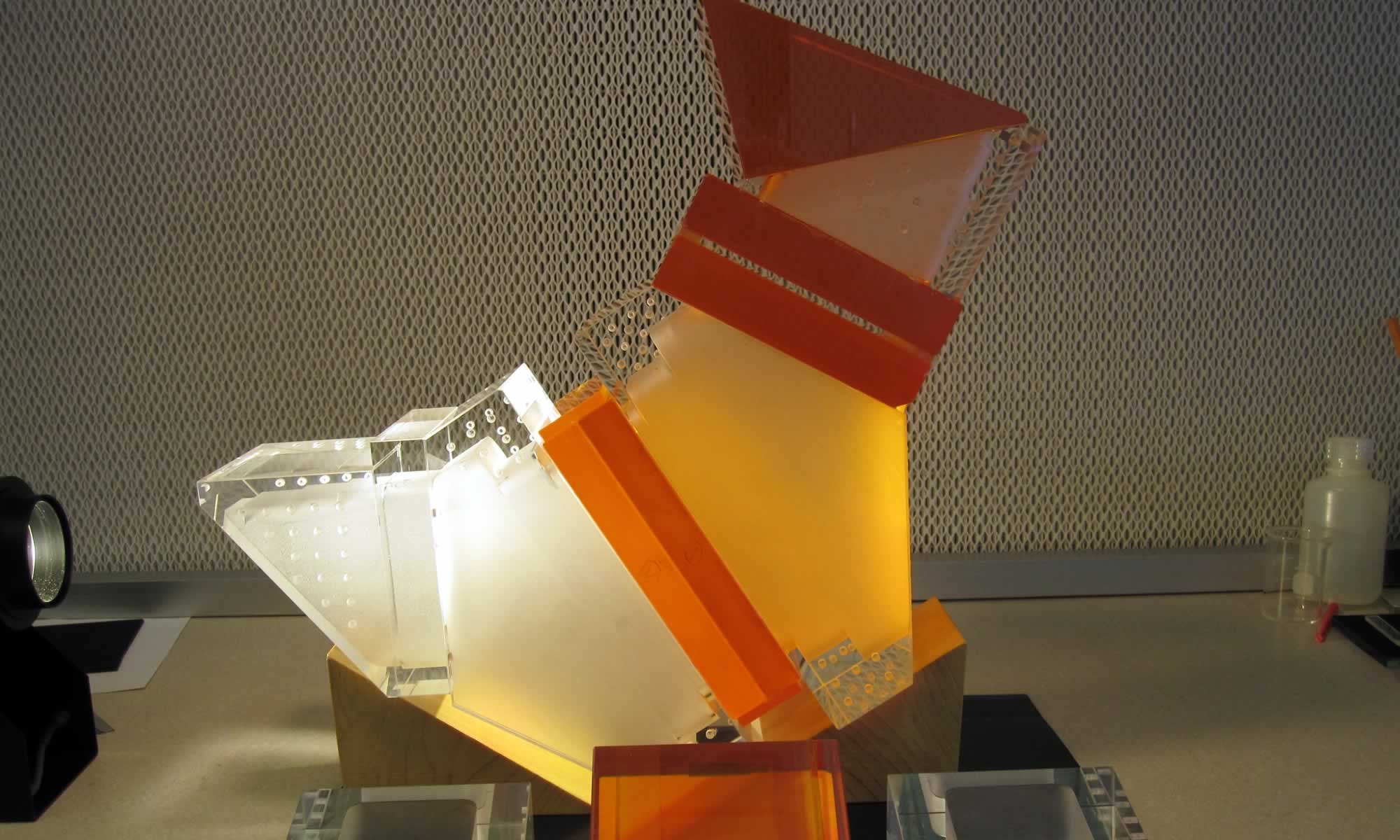
Michelson interferometers are complex to design and build. Paper and wooden models are often created during the project to aid our engineering and manufacturing team construct the real instuments. |
 |
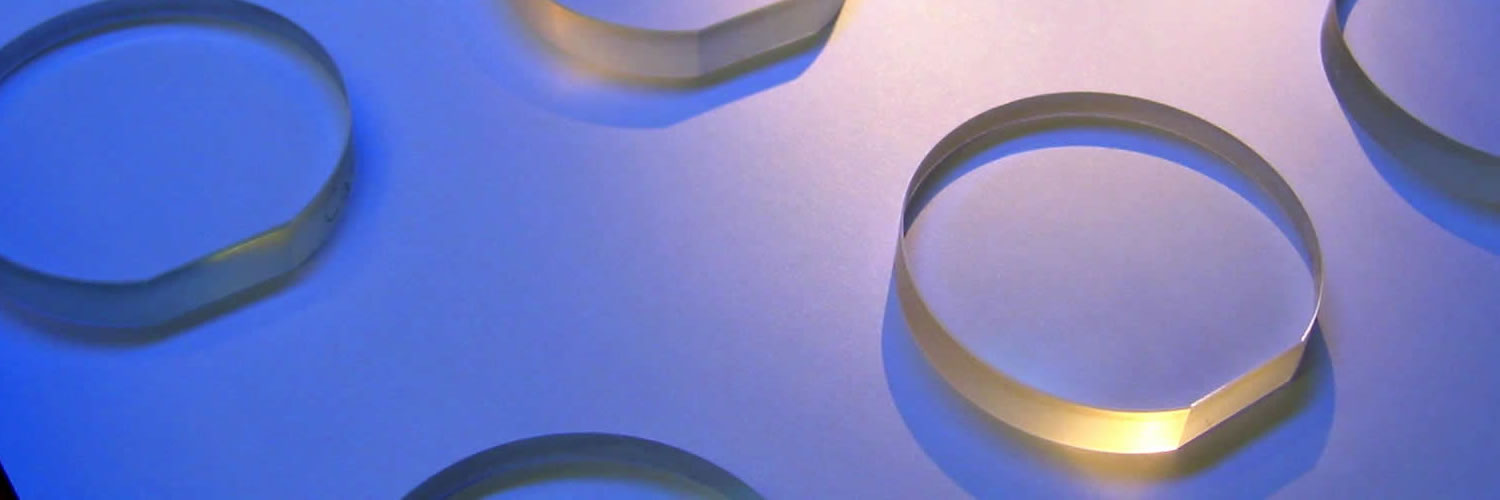
This michelson interferometer spacer is in process. The Calcium Fluoride spacer is designed to match the thermal expansion of the solid arm of the michelson and to transfer a minimum amount of stress to the end plate. |
 |
Another monolithic Michelson Interferometer in progress with a waveplate cemented on the far side of the cube. |
 |
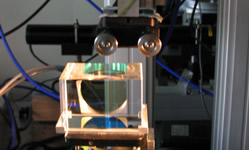
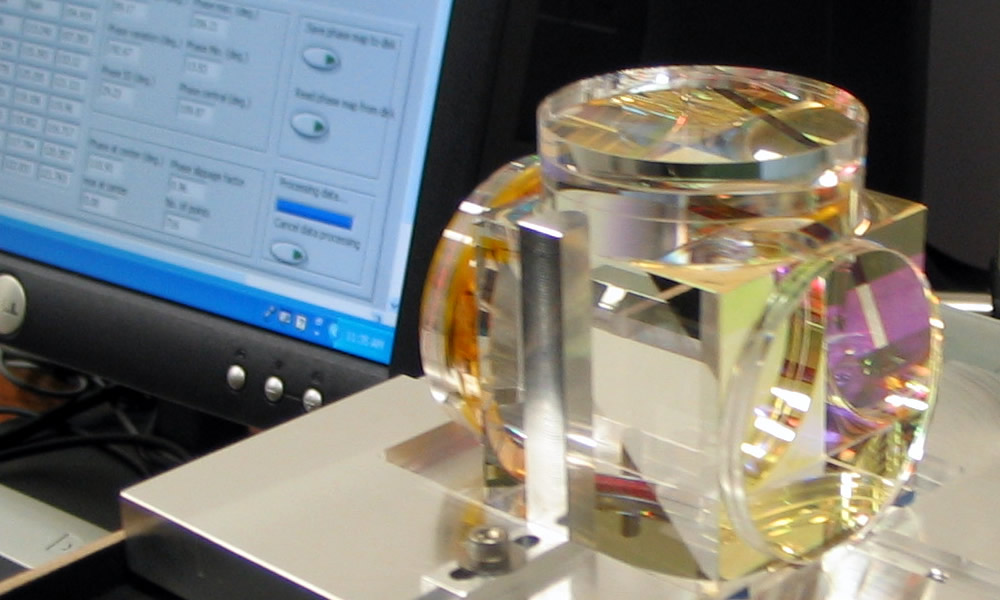
Fully automated testing ensures that all of the complex specifications of a Michelson Interferometer are met. |
 |
This is a field widened monolithic
35mm Michelson interferometer with the Calcium Fluoride ring spacer and multiple waveplates. Beautiful from any angle... |
 |
Final
assembly of a grating arm on a hexagonal michelson |
 |
Assembly
of a Michelson Interferometer with polarizers and waveplates |
 |
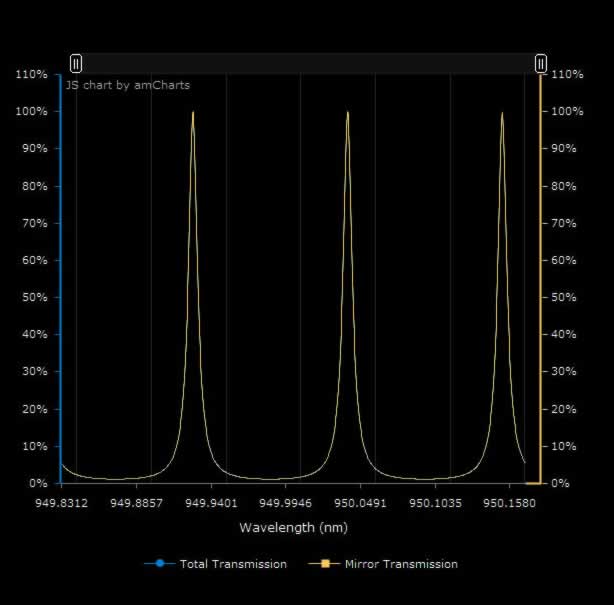
Testing the phase and amplitude properties of the michelson beam
splitter coating |
 |
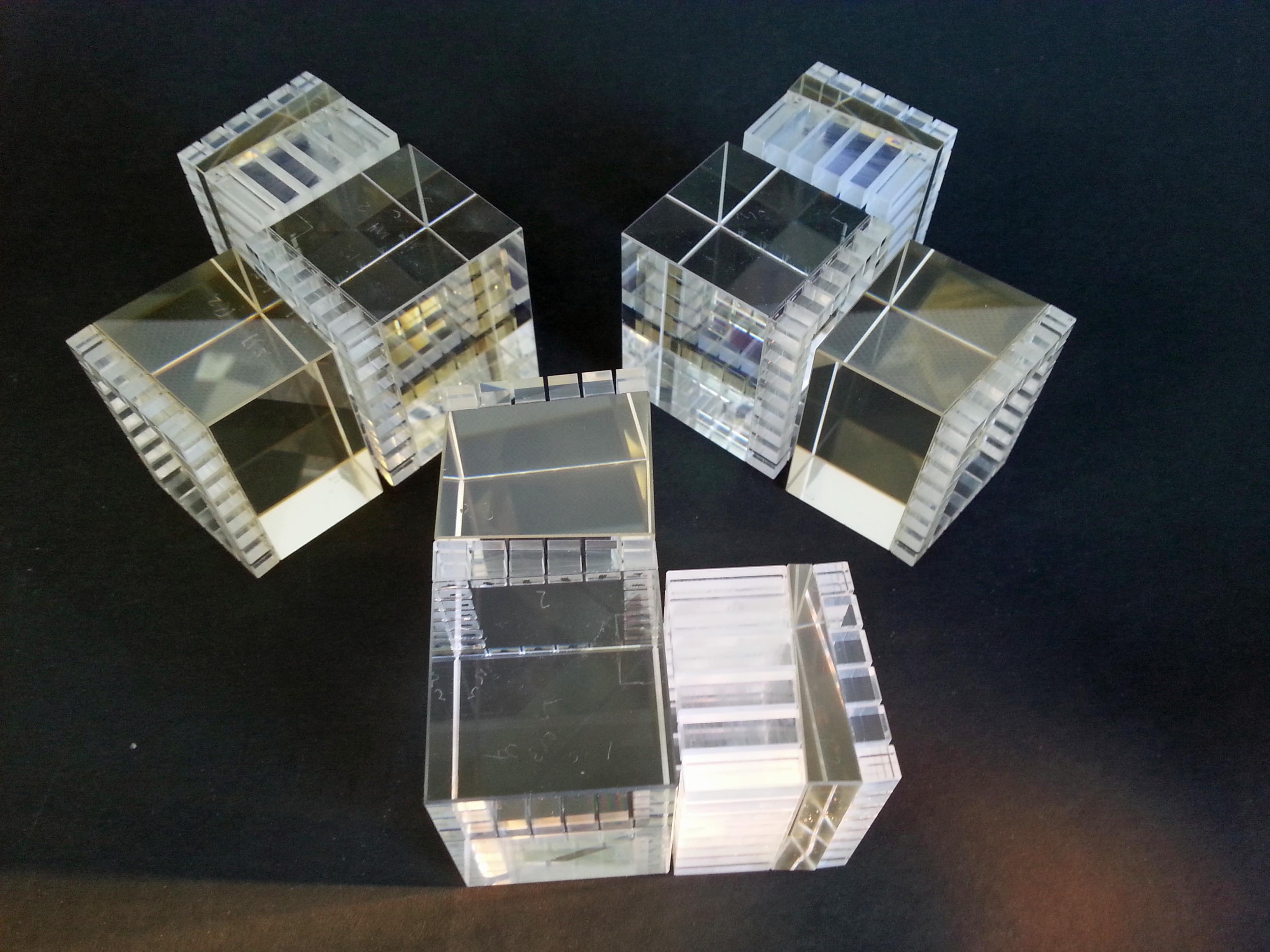
Preliminary
coating test cubes to check the spectral properties of the beam
splitter coating. |
Information
or Quote Request
Just fill out the form below to send us your quote request or
click here to send us an email and you can attach a drawing.