Fluid jet polishing is turning the world of optical fabrication upside down. LightMachinery can routinely create near perfect optical components using this cost effective, computer controlled technique.
Fluid Jet Technology
LightMachinery's fluid jet polishing system uses a fine stream of slurry to accurately remove nanometers of material.
A robust pumping system, developed by the LightMachinery engineering team, has almost no moving parts in contact with the slurry so that maintenance is kept to a minimum. Advanced software enables the correction of wavefront errors to achieve surfaces that are very close to perfect. The wide variety of materials that can be processed using the fluid jet system is enabling applications that were previously considered impossible or too expensive with conventional technology. Major optics manufacturing companies have confirmed that the surfaces created with the fluid jet process are low roughness and have greatly reduced mid-spatial frequency errors compared to surfaces created using a competing computer controlled technique, MRF.
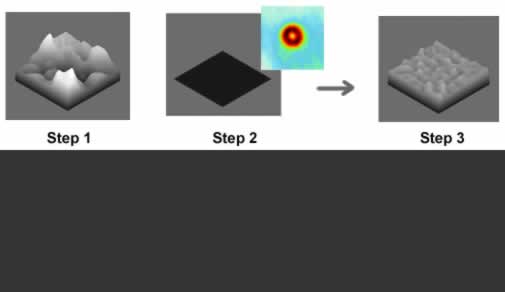
3 Simple Steps to Perfect Surfaces
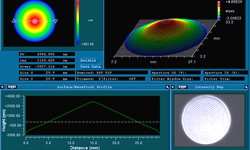
Step 1 Load the Current Surface, this is usually done using a Zygo data file Step 2 Load the Target Surface and Tool Profile Step 3 System displays the predicted surface
Click the Go! button and the system will start processing
Applications
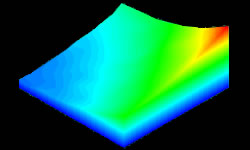
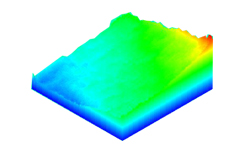
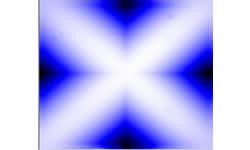
A conventionally polished 2" x 2" fused silica substrate (before fluid jet polishing) Measured with tunable laser mapping system in transmission there is a peak to valley slope of about 115nm
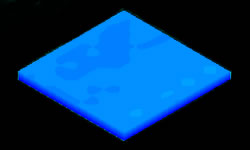
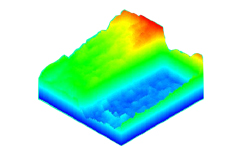
This same substrate after FJP Measured again with tunable laser mapping system in transmission there is a peak to valley error of about 3nm. Shown here in the same scale as above
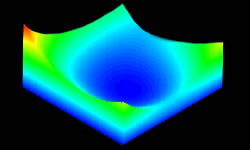
Another 2" x 2" fused silica square This substrate was measured in reflection using a Zygo interferometer, the error is very large, about 1.8um of concave shape
After FJP Shown here at the same scale as the picture above the error is 10nm peak to valley
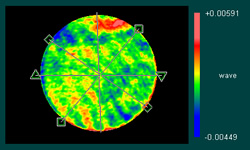
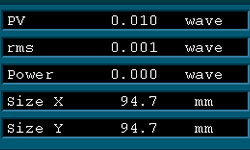
A Very Flat 4" Silicon Mirror Measured with a Zygo GPI after fluid jet polishing this silicon mirror has a surface variation matched to the zygo test flat to 1/100 wave peak to valley over a 95% clear aperture
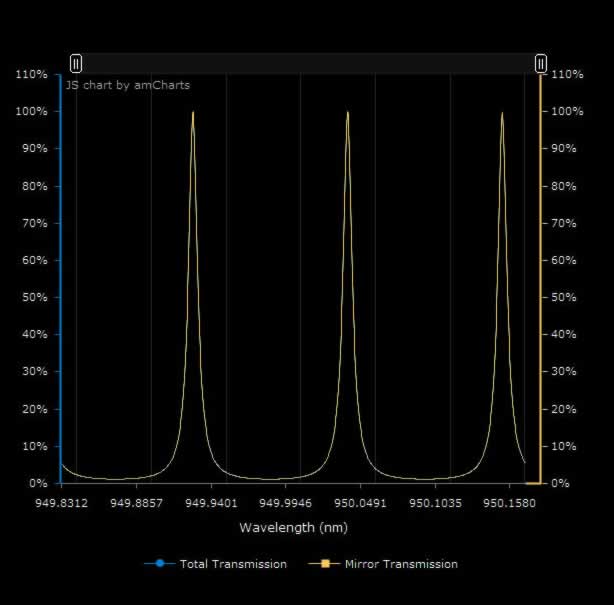
Note the rms surface figure of lambda/1000! This is important for creating high finesse etalons
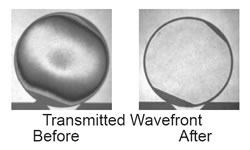
This before and after fluid jet polishing interferogram clearly demonstrates the FJP's ability to correct transmitted wavefront errors. This process was completed in a single pass, processing on only one side, based on transmitted wavefront data from a Zygo interferometer.
Target surface
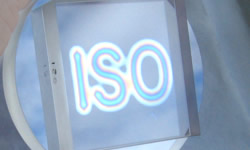
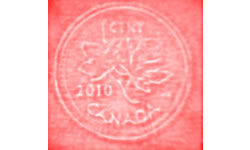
A simple .jpg, 256 x 256 of ISO (we are still very pleased about our ISO 9001 certification). The depth was set to 250nm for the text.
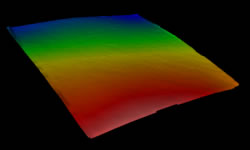
Starting Surface
This was already a pretty good surface, polished my our opticians to about 1/8 wave over the 2" x 2" square
After Fluid Jet Polishing
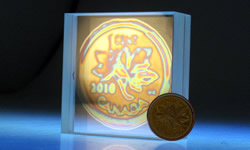
This beautiful pattern was made using the fluid jet polishing machine in the usual raster mode.
After Fluid Jet Polishing
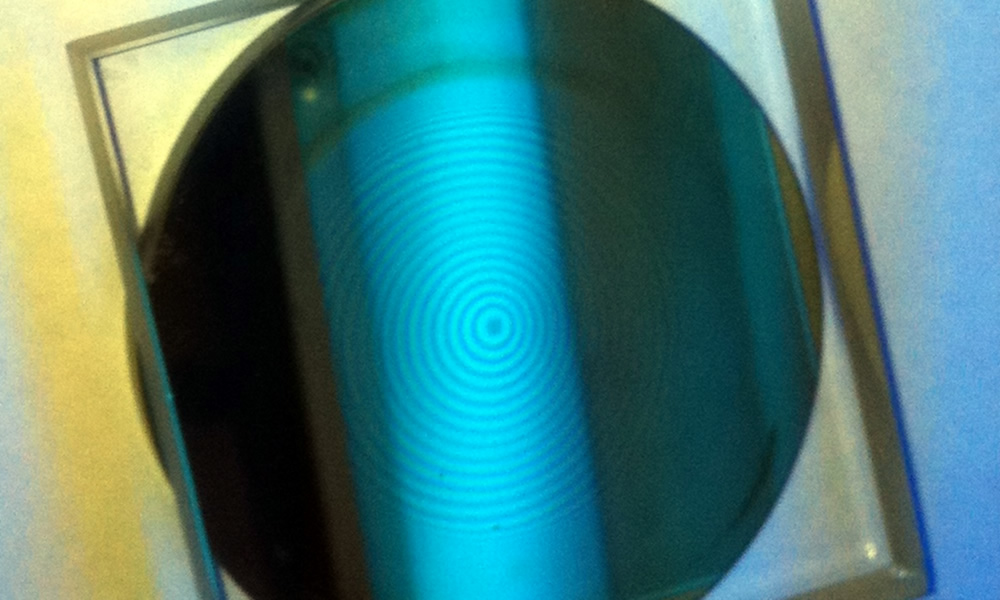
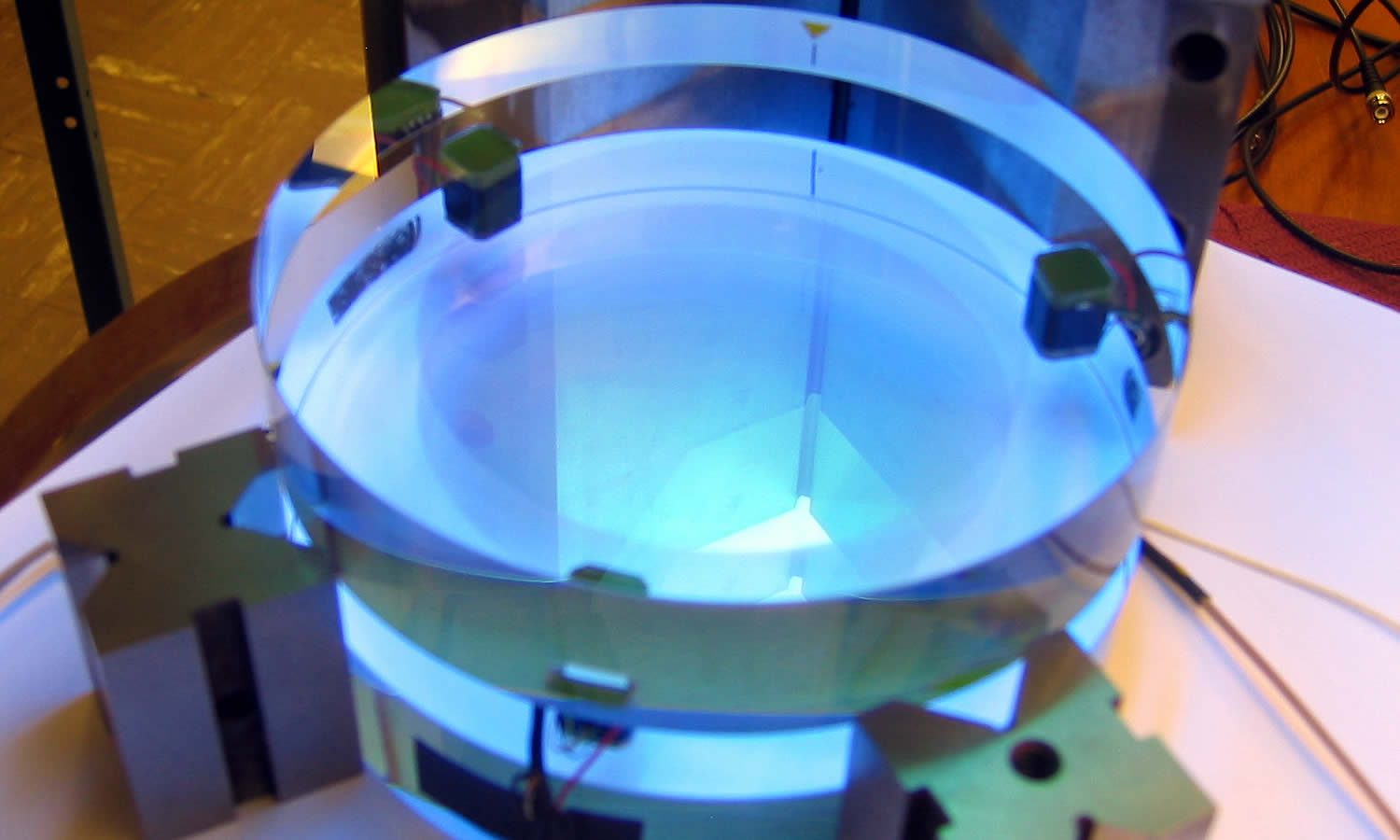
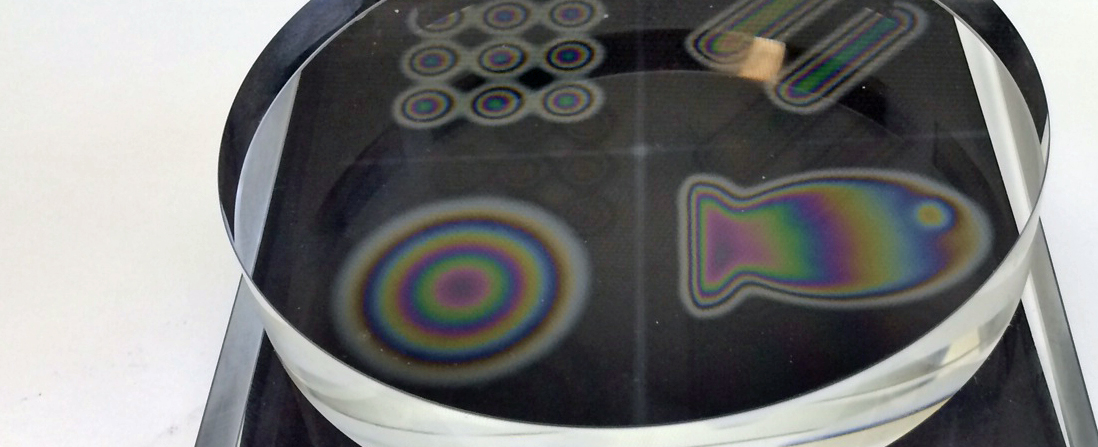
The ISO image is polished (backwards) into the square optical component that has then been optically contacted to the lower 3" diameter holder. The visible fringes are from the air space between the surfaces.
Target surface
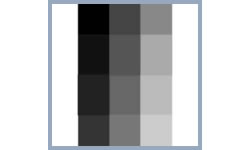
Another simple .jpg, 256 x 256. A constant change in color value between each segment.
After Fluid Jet Polishing
A stepped depth that gives rise to a phase mask matrix
Air Spaced Etalon Matrix
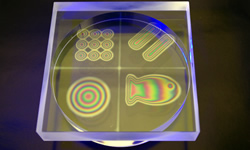
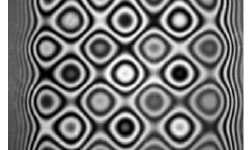
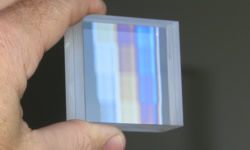
This piece was then optically contacted to a flat piece of fused silica creating an array of air spaced etalons. Each one is has a gap that is 100nm wider than its neighbor
Conventional Flatness λ/10
Shown here a conventionally polished fused silica substrate. The wedge in the part is very good, about 50nm, less than lambda/10
An Early FJP result - Flatness of λ/100 After processing half of the part with fluid jet polishing. The surface flatness is reduced about 6nm peak to valley or lambda/100
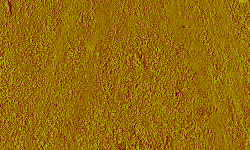
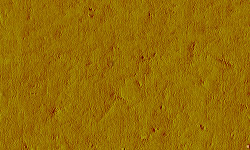
Atomic force microscope analysis of a conventionaly polished fused silica surface. The size of the area is 1.5 x 2.5 microns. Surface roughness is 1nm Rms
Atomic force microscope analysis of a fluid jet polished fused silica surface. The size of the area is 1.5 x 2.5 microns. Surface roughness is 1nm Rms
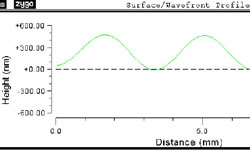
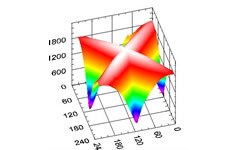
Micro-channels and complex patterns can also be created by combining fluid jet polishing with masking. These shallow microchannels are about 20nm deep and more than 1000nm wide (the vertical axis is greatly expanded). Applications include microfluidics and optical phase masks.
Component Fabrication
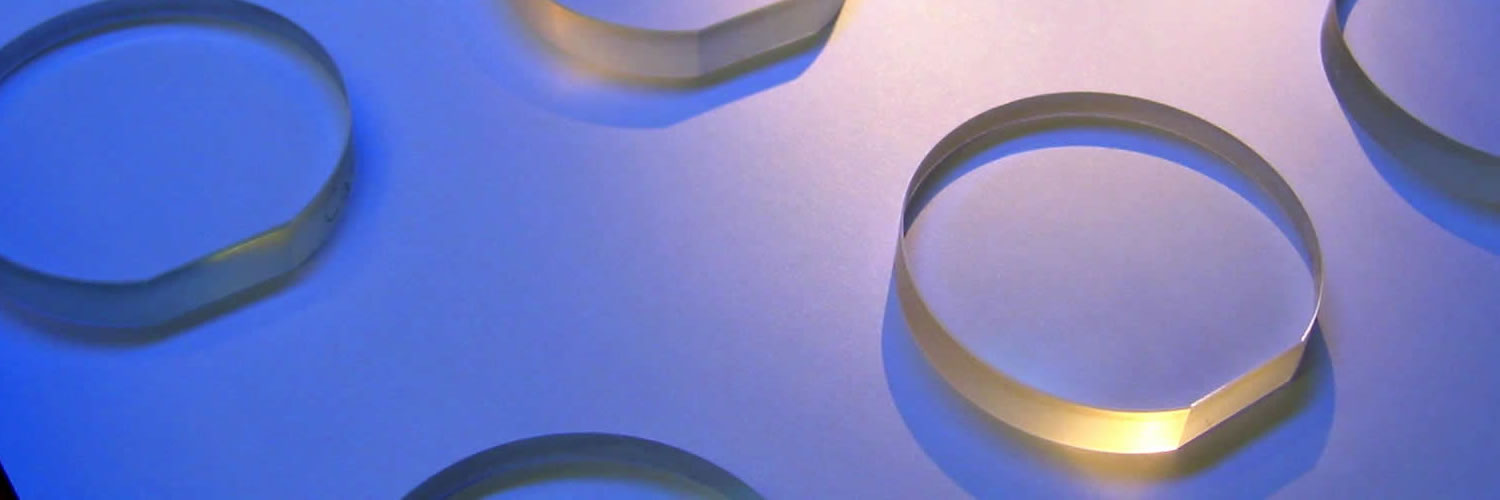
Fluid jet polishing is an enabling technology that enables LightMachinery to tackle some very complex and difficult optical fabrication tasks with confidence. In particular the ability to maintain the shape a flatness of very components with very thin aspect ratios has allowed LightMachinery to fabricate very uniform thin etalons and wafers. The ability to measure the final performance of complex assemblies such as Michelson Interferometers and then to make arbitrary surface corrections to these components is opening up a new era of astronomical device manufacture. Contact us to discuss your requirements
Free Sample Processing
Curious about the power of fluid jet? Send us a sample of your material for processing. Just contact us to arrange the details. If you want to send us a target surface profile or a map of your current surface then simply send it to us as a square file (.text, .xls, .jpg, .png) each element should represent the desired (or current) profile or thickness of the component in nanometers. You wil also need to tell us the size of the component and the material.
Fluid Jet Polishing Technology Perhaps your application is outside the world of conventional optical polishing. We are still here to help. Fluid jet polishing is capable to smoothing and adjusting a very wide range of materials from metals to Silicon Carbide. Please contact us to discuss you application and we will be glad to work with you on finding a solution.
If your application requires truly flat smooth surfaces, uniform thickness or surfaces with arbitrary shapes then contact our staff to discuss your needs.
Information or Quote Request
Just fill out the form below to send us your quote request or click here to send us an email and you can attach a drawing.